

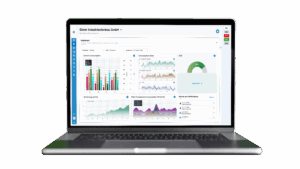
With VISUALFURNACE 8, EBNER sets new digitalization standards. This modular .NET-based process control system supports hybrid networking and seamless integration with MES, PM, and ERP systems. Smart extensions such as ATMOSPHEREperfect and MAINTENANCEperfect enhance efficiency, safety, and sustainability. Even existing systems can be upgraded to meet the latest standards. EBNER’s digital solutions combine intelligent process optimization with modern software technologies, helping customers further improve operational efficiency and plant performance.
Digitalization at EBNER includes the seamless integration of systems from the control level (PLC) via SCADA up to MES and ERP systems. This vertical networking enables highly efficient system operation, allowing processes to be controlled precisely and resources to be utilized effectively. One example is the ATMOSPHEREperfect software module, which can reduce energy and hydrogen consumption by up to 20% through intelligent process control.
Horizontal networking between systems enables in-line process control, predictive maintenance, digital shop floor management, and real-time energy monitoring. Tools such as customizable energy dashboards and backup solutions provide transparency and support the continuous optimization of production processes.
In response to rising energy costs and increasing digitalization requirements, EBNER developed the ATMOSPHEREperfect software module for HICON/H₂® bell annealers. This intelligent system uses real-time data and advanced algorithms to automatically regulate hydrogen flow, reducing energy and hydrogen consumption by up to 20% without compromising product quality. Integrated into the VISUALFURNACES platform, it improves process stability and supports more efficient plant operation. By combining digitalization with intelligent process control, ATMOSPHEREperfect helps customers optimize production processes and strengthen their competitiveness.
Energy savings
ECOMODE and TREATperfect are advanced tools designed to reduce energy consumption in heat treatment. ECOMODE optimizes fan and blower speeds while adjusting annealing times for maximum efficiency. TREATperfect complements this with intelligent real-time control and predictive planning, helping to minimize energy consumption, emissions, and material waste. Together, they improve furnace performance, increase throughput, and support efficient and cost-effective manufacturing, including in retrofitted systems.
Energy savings
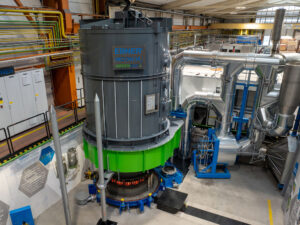
The GREENBAFx® product line was developed in response to customer demand for equipment that combines market competitiveness, regulatory compliance, and energy efficiency. Designed to meet demanding environmental and air-pollution requirements, the furnace significantly reduces energy consumption and emissions. With features such as an emission-free process, integrated electric heating, and advanced heat exchange between charge stacks, it achieves energy savings of up to 30%. The system also minimizes crane movements and allows for compact layouts, while its modular components can be retrofitted for added flexibility.
GREENBAFx® represents an innovative solution that combines energy efficiency, operational performance, and flexibility to support our customers’ production requirements.
Learn more about our GREENBAFx® here.
CO2 reduction, NOx reduction, Energy savings
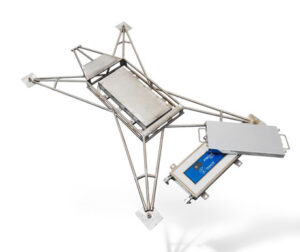
The EBNER Temperature Measurement System ensures precise, real-time temperature monitoring throughout the entire process, including the water quench phase, and complies with AMS 2750 and CQI-9 standards.
With a 6-channel data logging system, it enables improved control of heating and cooling cycles, helping to reduce soaking times, optimize cooling, and lower energy consumption. The design also supports reduced water flow, improved strip shape, and full verification of the heat treatment process.
Rapid installation, adjustable system parameters, and regular facility surveys make the system a reliable and efficient solution.
Learn more about our Temperature Measurement System.
Energy savings
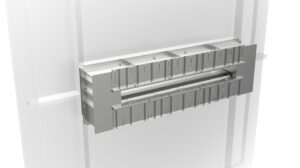 Our optimized furnace inlet design provides energy savings of over 20% compared to conventional designs, while also reducing emissions and minimizing the impact of heat on surrounding areas. The flexible inlet configuration can be adapted to a wide variety of strip formats and can be easily installed in existing facilities, making it an efficient and versatile solution.
CO2 reduction, Energy savings
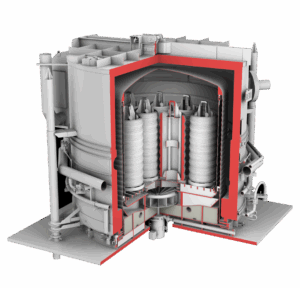
To ensure that energy resources are used efficiently, one of our sustainability objectives is the continuous reduction and control of heat losses in our industrial furnaces. In response to customer requirements, we have focused on improving furnace wall insulation through the use of higher-quality materials and optimized design concepts.
These improvements reduce heat losses by up to 15%. By increasing thermal efficiency, operating costs can be reduced while making more effective use of energy resources. These efforts reflect our commitment to efficient production and responsible energy use, while supporting both customer requirements and regulatory expectations.
Energy savings
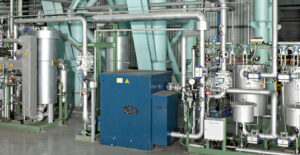 An EBNER hydrogen recycling system minimizes hydrogen losses by efficiently filtering and reusing hydrogen during the process. This approach enhances energy efficiency, reduces hydrogen consumption, and contributes to lower operating costs.
- Reduced consumption of H₂ process atmosphere.
- Lower operating costs and rapid ROI.
- Hydrogen contaminated with lubricant is flared off at the outburner, with the released energy reused at the heating bell.
- Minimally contaminated hydrogen (e.g. from the soaking phase) is stored and reused as a process atmosphere during the heating phase of the next process.
- At bell annealer facilities, hydrogen consumption can be reduced by up to 30% (depending on the operating mode).
- At continuous heat treatment facilities, hydrogen consumption can be reduced by up to 75% without influencing strip surface quality.
Energy savings
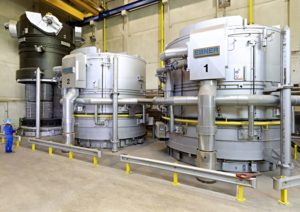 Waste heat recovery plays a key role in improving energy efficiency by recovering thermal energy from exhaust gases and cooling water. Internally, this recovered energy can be used for processes such as strip preheating, heating degreaser tanks, and drying applications. Externally, it can be utilized for workshop heating, sanitary facilities, and other plant requirements, helping to reduce overall energy consumption.
CO2 reduction, Energy savings
The EBNER Process Atmosphere Burn-out Burner uses combustion to recover energy from the process atmosphere while flaring off combustible waste products. The recovered energy is returned directly to the process, for example to the heating bell of a bell annealer facility. An additional benefit is the reduction of emissions, as vaporized lubricants are combusted during the process.
Energy savings
Combustion air preheating significantly increases energy efficiency and reduces CO₂ emissions. Central recuperators can achieve fuel savings of up to 20% in applications such as austenitizing furnaces, while radiant tubes with recuperative burners offer savings of up to 30%. Compared to conventional systems, large recuperators can reduce fuel consumption and CO₂ emissions by up to 7% in bell annealer facilities.
CO2 reduction, Energy savings
In response to rising energy costs and increasing digitalization requirements, EBNER developed the ATMOSPHEREperfect software module for HICON/H₂® bell annealers. This intelligent system uses real-time data and advanced algorithms to automatically regulate hydrogen flow, reducing energy and hydrogen consumption by up to 20% without compromising product quality.
Integrated into the VISUALFURNACES platform, it enhances process stability and supports intelligent process control. By combining digital technologies with advanced process optimization, it helps strengthen the competitiveness of steel producers.
Energy savings
ECOMODE and TREATperfect are advanced tools designed to reduce energy consumption in heat treatment. ECOMODE optimizes fan and blower speeds and adjusts annealing times for maximum efficiency. TREATperfect enhances this with intelligent, real-time control and predictive planning, helping to minimize energy consumption, emissions, and material waste. Together, they improve furnace performance, increase throughput, and support efficient, cost-effective manufacturing, including in retrofitted systems.
Energy savings
The ECOBURN FL flameless burner ensures stable combustion without a visible flame by using exhaust gas recirculation to achieve uniform temperature distribution. This advanced design reduces NOx emissions by up to 60% compared to conventional flame burners, making it a highly efficient solution for modern heat treatment applications
Learn more about our burner systems here.
NOx reduction
Waste heat recovery plays a key role in improving energy efficiency by recovering thermal energy from exhaust gases and cooling water. Internally, this recovered energy supports processes such as strip preheating, the heating of degreaser tanks, and drying applications. Externally, it can be used for workshop heating, sanitary facilities, and other plant requirements, helping to reduce overall energy consumption.
CO2 reduction, Energy savings
By reducing the concentration of O₂ in the combustion air, an EBNER exhaust gas return system can reduce NOx emissions by up to 25%.
NOx reduction
The ECOBURN H2 FLEX offers a high degree of flexibility, as it can be operated with natural gas, hydrogen, or any desired mixture of the two. It supports combustion air preheating up to 550°C and is designed to allow external exhaust gas admixing. With UV flame supervision, an infinitely variable output range of 60 – 175 kW per burner, and an optional flameless mode, this burner provides high efficiency, low emissions, and reliable performance across a wide range of applications.
CO2 reduction
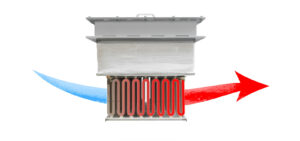 Electrification is an important development in industrial heat treatment technology. By replacing gas-fired burners with electric heating solutions, companies can reduce emissions and support compliance with environmental and regulatory requirements.
- Can be retrofitted into existing gas-fired systems
- Applicable for various furnaces with low- to high-temperature applications
- Electric radiant tubes
- Resistance heating systems
- Induction heating systems
- Hybrid heating systems
CO2 and NOx reduction
Our optimized furnace inlet design provides energy savings of over 20% compared to conventional designs, while also reducing CO₂ emissions and minimizing the impact of heat on surrounding areas. The flexible inlet configuration can be adapted to suit a wide variety of strip formats and can be easily installed in existing facilities, making it an efficient and versatile solution.
CO2 reduction, Energy savings
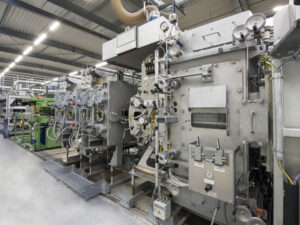 HICON/H2Q quenching technology replaces traditional molten-metal quenching methods in hardening and tempering lines, eliminating the use of lead and the associated emissions. The result is a bright, lead-free strip surface with improved product quality. Downstream processes such as grinding or polishing can often be avoided, while working conditions for strip-cleaning personnel are improved.
Pb reduction
The SCR (Selective Catalytic Reduction) system is designed to significantly reduce NOx emissions in furnace operations.
- NOx reduction through an SCR system installed at the exhaust gas stack
- Catalyzer unit for chemical reaction and NOx reduction
- Continuous monitoring of exhaust gas emissions
- Designed to meet strict emission standards
- Can be integrated into existing facilities
- Successfully implemented in multiple installations
NOx reduction
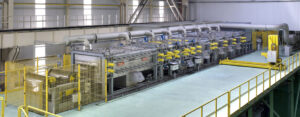 EBNER strip cleaning systems can be operated either without lye or with only minimal amounts of lye. The primary cleaning agent is hot water under high pressure. In many applications, the use of lye can be significantly reduced, for example by limiting its use to specific cleaning zones such as the brush cleaning zone, or eliminated entirely.
Learn more about our Strip Cleaning Facilites.
NaOH reduction, KOH reduction
The GREENBAFx® product line was developed in response to customer demand for equipment that combines market competitiveness, regulatory compliance, and energy efficiency. Designed to meet demanding environmental and air pollution requirements, the furnace significantly reduces energy consumption and emissions. With features such as an emission-free process, integrated electric heating, and advanced heat exchange between charge stacks, it achieves energy savings of up to 30%. The system also minimizes crane movements and allows for compact layouts, while its modular components can be retrofitted for added flexibility. GREENBAFx® represents an innovative solution that combines energy efficiency, operational performance, and flexibility to support our customers’ production requirements.
Learn more about our GREENBAFx® here.
CO2 reduction, NOx reduction, Energy savings
Combustion air preheating significantly increases energy efficiency and reduces CO₂ emissions. Central recuperators can achieve fuel savings of up to 20% in applications such as austenitizing furnaces, while radiant tubes with recuperative burners can deliver savings of up to 30%. In bell annealer facilities, large recuperators can provide an additional 7% reduction in fuel consumption and CO₂ emissions compared to conventional systems.
CO2 reduction, Energy savings